Site Development That Keeps Projects Moving
Commercial Site Work in Ellijay for excavation, grading, and utility preparation supporting construction timelines
Commercial projects require site preparation before construction begins—removing existing material, establishing grades that direct water away from structures, and exposing or installing utilities that serve the development. Delays in site work push every subsequent trade back, which increases carrying costs and risks missing occupancy deadlines. Teague Outdoor Contracting handles commercial site work across Ellijay for contractors and developers who need excavation, grading, land clearing, and utility preparation completed on schedule so building phases can proceed without waiting on earthwork to catch up.
Site development involves coordinating multiple activities—clearing vegetation and stripping topsoil, excavating to design grades, installing drainage structures and utility trenches, and compacting fill material to support paving and foundations. The work follows engineered plans that specify elevations, slopes, and infrastructure locations, requiring equipment operators who can interpret grading stakes and work to tolerance requirements tighter than residential projects typically demand. Scheduling matters as much as execution, since site conditions change with weather and other trades need access at specific project phases.
Contact the team for commercial project planning and site work coordination tailored to your development timeline.
What Commercial Site Development Involves
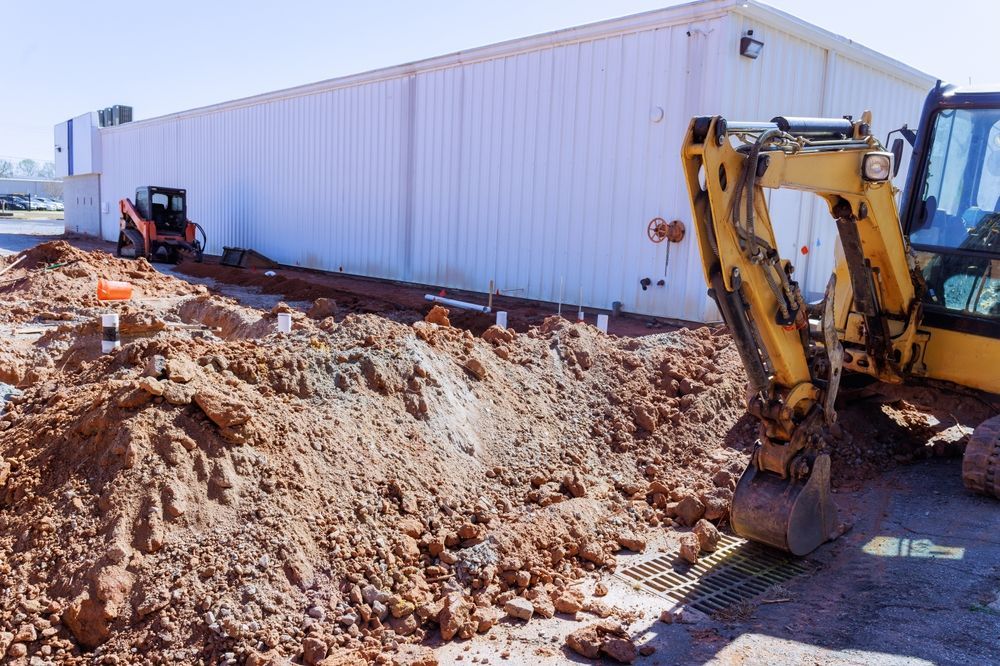
Commercial site work translates engineered drawings into physical ground conditions, which means establishing precise grades, compaction levels, and utility placements that inspectors verify before construction proceeds. Excavation removes material to depths specified for footings or underground infrastructure, while fill areas are built up in compacted lifts that support loads without settling. Stormwater management structures go in during grading so runoff is controlled from the beginning rather than added later when access is limited.
After site work, you see level building pads at the specified elevation, parking areas graded to drain toward collection points, and utility stubs positioned where building systems will connect. Soil compaction testing confirms fill areas meet engineering requirements before paving or slabs are poured. Erosion controls installed during grading contain sediment until landscaping stabilizes disturbed areas. The site is ready for vertical construction without requiring rework to correct grade issues or relocate utilities that weren't positioned accurately during the initial earthwork phase.
Project size determines equipment needs and crew scheduling—smaller retail or office sites may require only excavators and dozers for grading and trenching, while larger industrial or infrastructure projects involve scrapers, articulated trucks, and multiple crews working simultaneously on different site areas. Safety protocols and traffic control become more complex when working near active roadways or occupied buildings, requiring coordination with local authorities and adjacent property owners throughout the work.
What Property Owners Usually Ask
Contractors and developers working on commercial projects in Ellijay typically want to understand scheduling, coordination, and quality control during site development.
What site work happens before building construction can start?
Clearing and rough grading establish access and approximate elevations, then utility trenching and installation occur, followed by fine grading to final elevations, compaction testing, and erosion control setup, creating a site ready for footings and foundation work without further earthwork interruptions.
How does weather affect commercial site work schedules?
Rain stops grading and compaction work since wet soil can't be properly compacted and equipment creates rutting that requires rework, while frozen ground prevents excavation, making fall and spring the most predictable seasons for site work in North Georgia despite occasional weather delays.
When should site work contractors be brought into project planning?
Early involvement allows site work planning to inform building layout and utility design, preventing expensive changes when grading reveals rock, unsuitable soil, or drainage issues that affect foundation design or require engineered solutions not anticipated in preliminary plans.
What coordination is needed between site work and other trades?
Utilities must be installed before final grading buries access points, foundations need compacted fill before forming begins, and paving requires finish grades and base material in place, making sequencing critical to avoid delays where one trade waits on incomplete work from another.
How is site work quality verified during commercial projects?
Compaction testing confirms fill areas meet engineering specifications, grade checks verify elevations match plans within tolerance, and inspections at key phases document that work complies with approved drawings before proceeding to stages that would make corrections difficult or impossible.
Teague Outdoor Contracting coordinates with contractors and developers to deliver site work that supports project schedules and meets commercial construction standards. Call (706) 669-0240 to discuss excavation, grading, and utility preparation for your commercial development.