
Access Built for Long-Term Durability
Driveway Installation in Ellijay for rural, residential, and larger acreage properties needing improved accessibility and proper drainage
Rural and residential properties in Ellijay, Georgia often require driveways that handle elevation changes, seasonal weather, and repeated vehicle loads over decades. New residential and commercial driveway construction addresses these demands through grading and preparation that promotes proper drainage and long-term durability. Teague Outdoor Contracting builds solutions for rural, residential, and larger acreage properties where local terrain considerations—slopes, soil drainage, and erosion potential—affect how driveways are designed and constructed.
Driveway installation involves excavating to stable subgrade, placing base material in compacted layers, and grading surfaces to shed water away from the driving surface and adjacent structures. The process accounts for slope steepness, soil type, and expected traffic loads to determine base depth and material specifications. Proper preparation prevents rutting, erosion, and surface failure that occur when driveways are built without adequate base or drainage planning.
Request a driveway estimate to evaluate your property's terrain, access requirements, and material options.
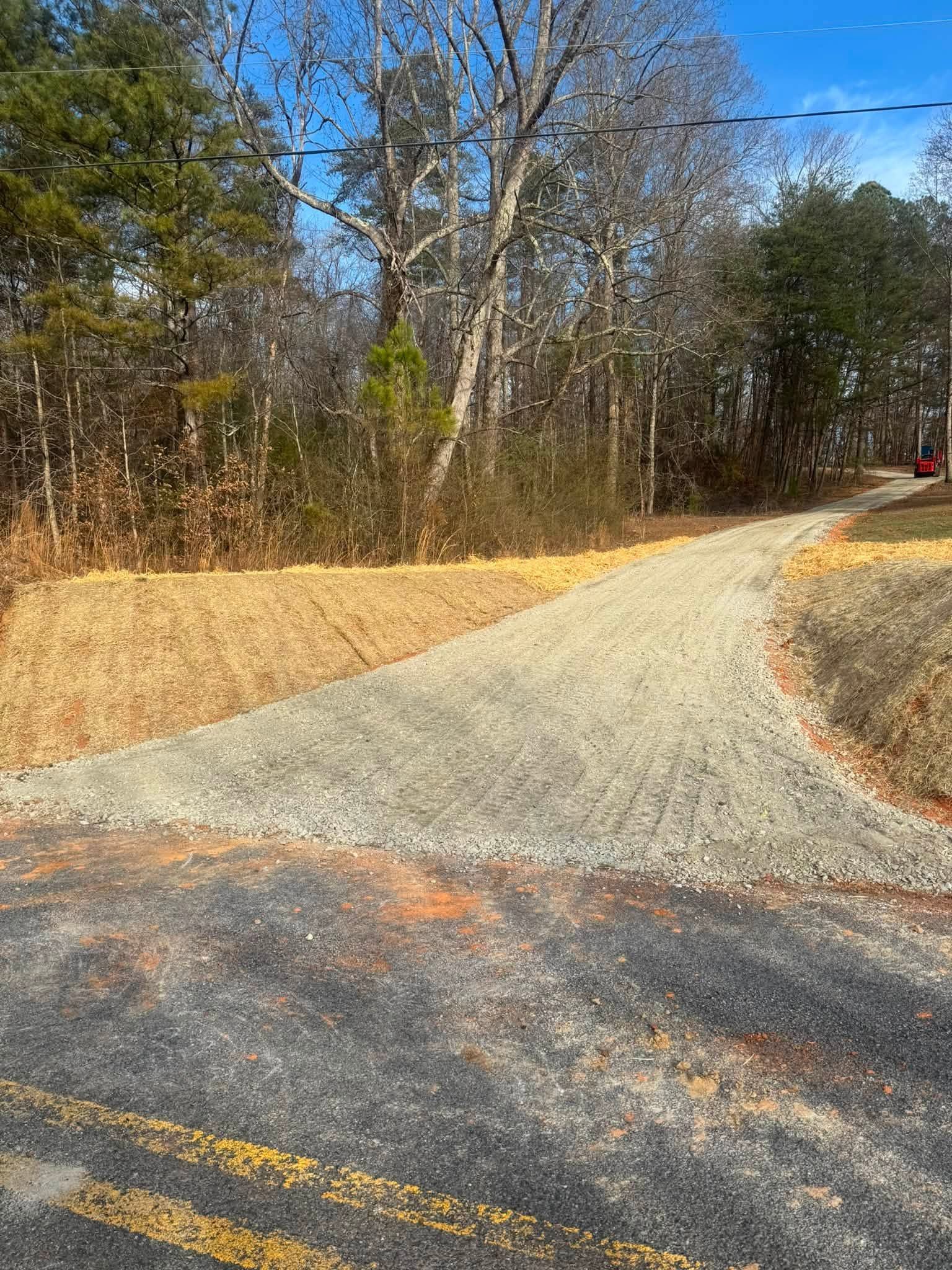
What Proper Preparation Accomplishes
Grading and preparation create stable, well-drained surfaces that support vehicle loads without settling or washout. Base material is compacted in layers to specified densities, which prevents soft spots and rutting under repeated traffic. Crown or cross-slope grading directs water off the driveway surface before it can pool or erode the base, which is especially important on North Georgia's sloped properties where runoff concentrates quickly during rain.
After installation, you'll notice a stable surface that vehicles traverse without sinking or creating ruts, clear edges where the driveway meets surrounding land, and water that runs off the surface instead of pooling or cutting channels. The driveway becomes measurably more functional—delivery trucks can access your property in wet conditions, erosion stops along the route, and maintenance needs decrease because the base remains stable under load.
Installation includes excavation, base placement, and grading to finished elevations. It does not include paving or surfacing materials like asphalt or concrete, which are separate services applied after the base is prepared. A properly constructed base extends driveway lifespan regardless of surface material, reducing long-term maintenance costs and preventing premature failure caused by inadequate preparation.
What Property Owners Usually Ask
Clients planning driveways on rural or sloped properties near Ellijay often have questions about construction methods, drainage requirements, and material choices before beginning their projects.
What does driveway grading and preparation involve?
Preparation removes topsoil and unstable material, excavates to firm subgrade, and places compacted base layers that distribute vehicle loads. Grading creates a crowned or sloped surface that sheds water, and edges are defined to prevent the base from spreading under traffic.
How does sloped terrain in Ellijay affect driveway construction?
Slopes require additional base depth to resist erosion from runoff, and steeper grades may need switchbacks or terracing to keep the driveway navigable. Drainage structures like culverts or cross-drains are often necessary to carry water under or across the driveway without washing out the base material.
When is the best time to install a driveway?
Construction is easier during dry conditions when soil is stable and compaction equipment works effectively. However, modern equipment and proper base material allow year-round construction if scheduling requires it, though wet conditions may require additional drainage measures during installation.
What base material is used for driveway construction?
Crushed stone or gravel with a range of particle sizes compacts tightly and drains well, making it a common choice for driveway bases. Material specifications depend on soil conditions, traffic loads, and whether the driveway will be paved or left as a gravel surface.
How wide should a driveway be for residential use?
Standard residential driveways range from ten to twelve feet wide for single-lane access, with wider sections at gates or turnouts where vehicles need to pass. Width depends on property access needs, vehicle size, and whether the driveway serves multiple structures or heavy equipment.
Teague Outdoor Contracting constructs driveways for rural, residential, and acreage properties throughout Ellijay, addressing terrain challenges and drainage requirements with careful grading and preparation. Schedule an estimate to discuss your property's access needs and design a durable driveway solution.