
Vegetation Removed Without Hauling Debris
Forestry Mulching in Ellijay for brush clearing and land management with minimal site disturbance
Forestry mulching processes standing vegetation into ground cover in a single pass, cutting brush, saplings, and undergrowth at ground level and shredding it into mulch that stays on-site rather than requiring removal. Teague Outdoor Contracting uses this method across Ellijay properties when you need to clear overgrown areas, establish trails, or manage timber understory without the soil disruption and debris piles traditional clearing creates. The approach works for hunting land management, trail systems, property boundary maintenance, and preparing overgrown lots for development where leaving the root structure intact prevents erosion on sloped terrain.
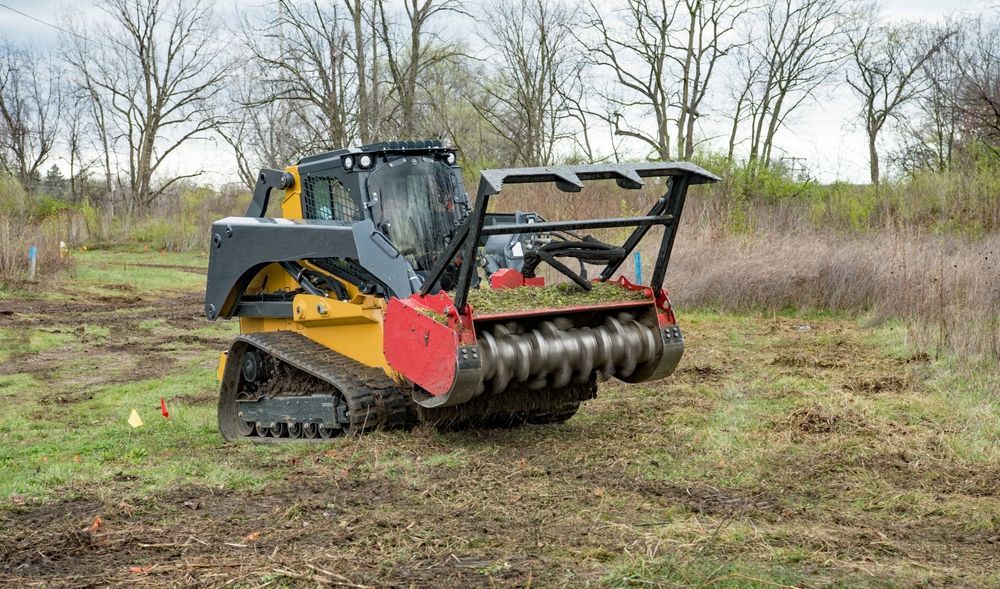
The process uses a dedicated forestry mulching machine equipped with a rotating drum and cutting teeth that grinds vegetation as it moves across the property. Small trees, thick brush, and dense undergrowth are reduced to mulch chips that decompose naturally, adding organic matter back into the soil rather than creating burn piles or requiring hauling. Larger trees beyond the machine's capacity can be felled separately and either removed or mulched depending on your land management goals.
Request a forestry mulching estimate to evaluate clearing needs and vegetation density on your property.
What You Notice Once Forestry Mulching Is Finished
Forestry mulching leaves a layer of shredded organic material covering the cleared area, which looks distinctly different from bare soil left by dozer clearing or the rough, uneven surface created by cutting and piling brush. The mulch layer provides immediate ground cover that slows regrowth of unwanted species and protects soil from erosion while desirable vegetation establishes or existing trees mature without understory competition.
After mulching, you can walk or drive through areas that were previously impassable due to thick brush. Sight lines open across the property, making it easier to monitor boundaries, identify hazards, or enjoy views that vegetation had blocked. The root systems of cleared plants remain in the ground, continuing to hold soil on slopes where traditional clearing would leave disturbed earth vulnerable to washout during North Georgia's seasonal rains. Fire risk decreases in areas where accumulated dead brush previously created fuel loads.
Forestry mulching works best for vegetation management rather than full land clearing—it handles brush and small trees efficiently but isn't intended for grading work or removing stumps from large timber. Properties with mixed vegetation benefit most, since the method selectively targets problem growth while leaving desirable trees and ground cover intact. Maintenance mulching every few years keeps cleared areas open without requiring intensive clearing work each time.
Questions Before Starting Your Project
Property owners considering forestry mulching often ask about capabilities, site conditions, and how the process compares to other clearing methods.
What size vegetation can forestry mulching handle?
Most forestry mulching equipment processes brush and trees up to six inches in diameter efficiently, with some machines handling up to eight inches, but larger timber typically requires felling first and can either be removed or processed separately depending on your clearing objectives.
How does forestry mulching compare to dozer clearing for land preparation?
Forestry mulching leaves root structure and topsoil undisturbed, creating less erosion risk but not changing site grade, while dozer clearing removes roots and can reshape terrain but leaves bare soil requiring stabilization—your development plans determine which approach serves the property better.
When is the best time of year for forestry mulching in Ellijay?
Dry conditions allow equipment to operate without rutting soil, making late summer and fall ideal for most properties, though winter clearing on frozen ground also minimizes site disturbance if the work needs to happen during the dormant season.
What happens to the mulch left on-site after clearing?
The mulch layer decomposes naturally over one to two years, adding organic matter to the soil while suppressing regrowth of many cleared species, though invasive plants may still require follow-up treatment since forestry mulching doesn't kill root systems.
How much area can be mulched in a day?
Production rates vary widely based on vegetation density and terrain—open areas with light brush clear much faster than slopes choked with thick saplings and vines, but typical rates range from one to three acres daily under average conditions.
Teague Outdoor Contracting evaluates vegetation type and density to determine whether forestry mulching suits your land management needs. Reach out to discuss clearing options for your property or hunting land.