Slopes That Stay Put During Heavy Rain
Erosion Control in Ellijay for properties with steep terrain and seasonal runoff issues
North Georgia's hill country experiences seasonal rainfall patterns that move soil downslope, particularly on disturbed land where vegetation hasn't stabilized the surface. Teague Outdoor Contracting addresses erosion control across Ellijay properties where grading work, construction activity, or natural slope conditions create runoff channels that carry topsoil away from where it's needed. You'll see bare soil patches, gullies forming after storms, or sediment piling up at the base of slopes when erosion actively reshapes your property.
Erosion control involves evaluating how water moves across your property during rain events, then installing solutions that slow runoff velocity and hold soil in place. Depending on slope angle, soil type, and the volume of water moving through an area, methods range from establishing vegetative cover and installing silt fencing to creating terraced grades that interrupt water flow before it gains enough speed to carry sediment. Planning accounts for property layout, existing drainage patterns, and whether the site is an active construction zone or a finished landscape requiring long-term stability.
Schedule a site evaluation to identify specific runoff patterns and soil movement areas on your property.
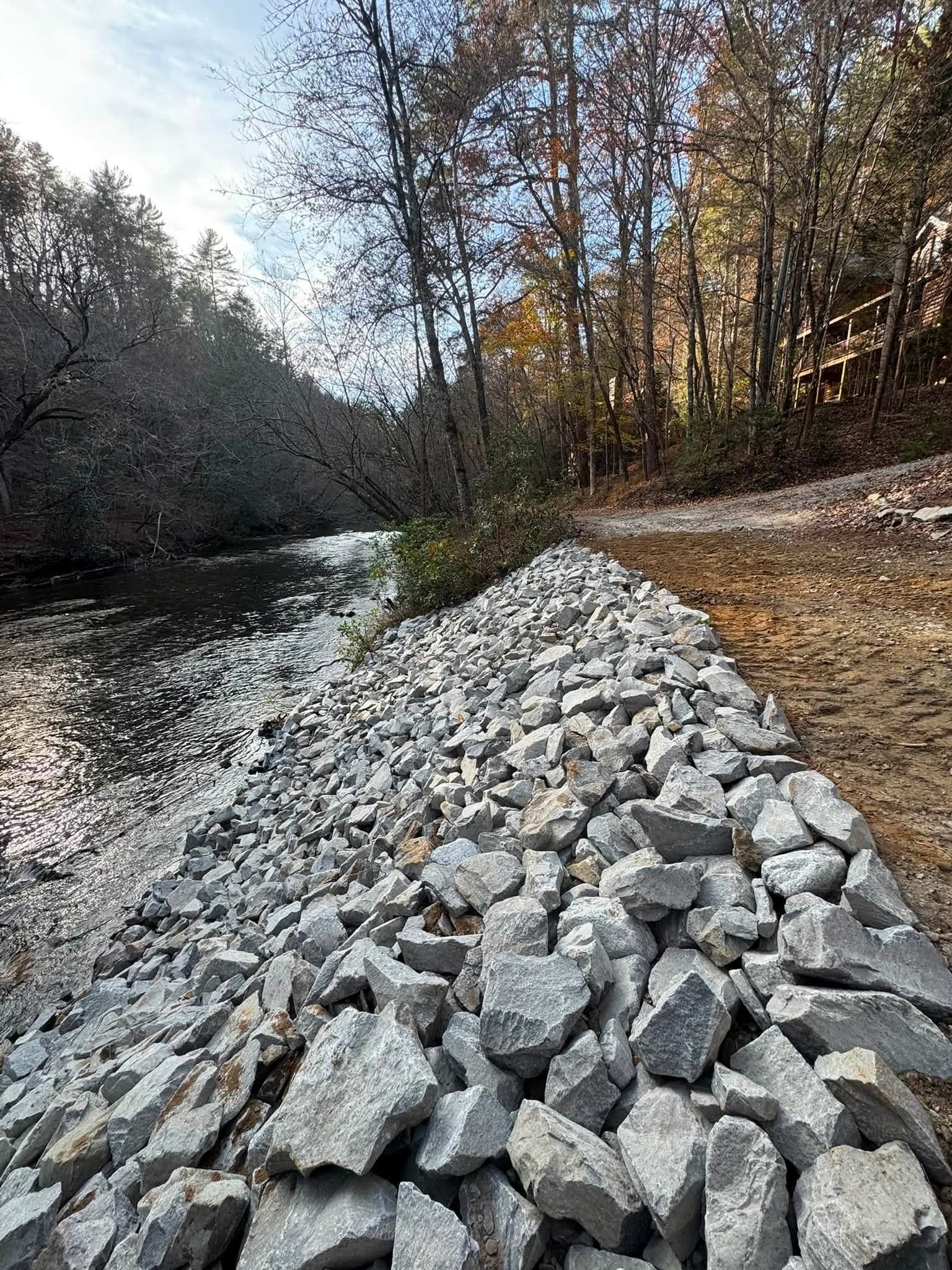
How Erosion Control Protects Sloped Land
Effective erosion management begins with understanding where water enters your property, how it travels across slopes, and where it exits. On construction sites, this often means installing perimeter controls before clearing begins so sediment doesn't leave the property during grading work. For finished landscapes, the focus shifts to establishing ground cover and creating physical barriers that reduce water velocity as it moves downhill.
Once erosion controls are in place, you notice water spreading across vegetated areas instead of cutting channels through bare soil. Sediment stays on your property rather than washing into drainage systems or neighboring lots. Slopes maintain their shape through multiple rain events, and areas previously prone to gullying remain stable. Vegetation establishes more successfully when soil stays in place long enough for root systems to take hold.
The right combination of methods depends on how much disturbance the site has experienced and how quickly you need stability. Temporary controls work for active construction, while permanent solutions incorporate vegetation, grading adjustments, and structures designed to manage runoff over years. Both approaches prevent the costly replacement of topsoil and protect the work you've already completed on the property.
What Property Owners Ask About Erosion Management
Property owners throughout Ellijay face similar questions when addressing slope stability and runoff concerns, especially given the region's terrain and weather patterns.
What causes erosion to worsen after land clearing?
Removing vegetation eliminates the root structure holding soil in place, and bare ground offers no resistance to water flow, so the first significant rain event after clearing often creates the most dramatic soil movement until protective measures are installed.
How does erosion control differ for construction sites versus established properties?
Construction sites require sediment barriers and temporary stabilization methods that contain soil during active grading work, while established properties benefit from permanent solutions like vegetation, terracing, or retaining structures that manage runoff long-term without ongoing maintenance.
When should erosion control be installed during a project?
Controls should be in place before any clearing or grading begins, particularly on slopes where even minor disturbance can trigger soil movement during the next rain, making it harder and more expensive to stabilize the site later.
What methods work best on steep slopes in North Georgia?
Steep slopes often require multiple approaches working together—silt fencing or fiber logs to slow water at key points, erosion blankets or hydroseed to establish vegetation quickly, and sometimes terracing or grade adjustments to reduce the length of uninterrupted slope where water can gain speed.
How long does it take for vegetation to provide erosion protection?
Ground cover establishes visible growth within weeks under good conditions, but roots need a full growing season to create the subsurface network that truly holds soil in place, which is why temporary physical controls remain important until vegetation matures.
Teague Outdoor Contracting evaluates site-specific conditions to recommend erosion control methods suited to your property's slope, soil, and use. Request a consultation to discuss stabilization options for your land.