
Pathways Built to Protect Infrastructure
Underground Utilities in Ellijay for construction projects requiring water, sewer, electrical, and utility infrastructure installation support
Construction projects depend on utility infrastructure installed below grade where it's protected from weather and surface activity. Underground utility trenching and installation support coordinates with new construction and site development in Ellijay, Georgia, creating installation pathways for water, sewer, electrical, and other utility infrastructure. Teague Outdoor Contracting uses reliable equipment and experienced operators to complete precise excavation that helps protect surrounding property while meeting project specifications for depth, alignment, and bedding material.
Trenching for utilities involves digging narrow, deep channels to specified depths, maintaining straight lines or planned curves, and preparing stable bedding for pipes and conduits. Depth requirements vary by utility type—water lines must sit below frost depth, sewer lines need consistent slope for gravity flow, and electrical conduits follow code requirements for burial depth and separation from other utilities.
Discuss utility installation needs to plan trenching routes, depths, and coordination with your construction timeline.
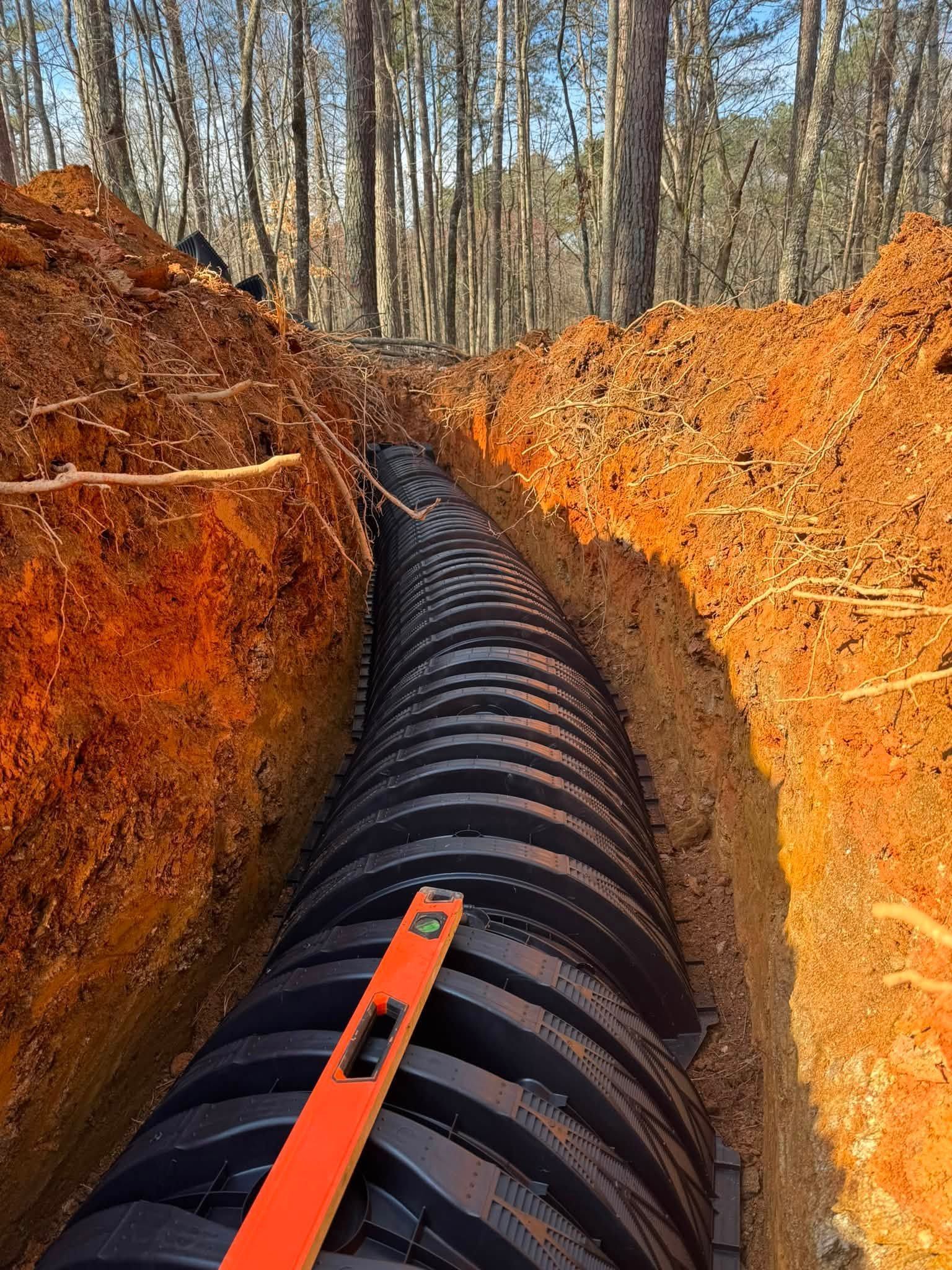
What Precise Trenching Provides
Precise excavation protects surrounding property by limiting trench width to what's necessary for pipe installation and backfill, reducing the area disturbed during utility work. Trenches are cut to exact depths that meet code requirements and maintain proper pipe slopes, which ensures water flows correctly and utilities function as designed. Coordination with new construction and site development means trenches are opened when installers are ready to place pipes, minimizing open excavation time and site disruption.
Once trenching is complete, utility lines sit at correct depths with stable bedding material surrounding them. You'll see restored ground surfaces where trenches were backfilled and compacted, and utilities that function reliably because pipes are aligned, sloped, and protected from settling or damage. These outcomes prevent future excavation to repair improperly installed lines and ensure that infrastructure supports the property's long-term use.
Trenching services include excavation, bedding preparation, and backfilling after utility installation. They do not include the actual pipe or conduit installation, which is typically handled by licensed plumbers or electricians. Proper trenching creates conditions for successful utility installation by providing straight, stable pathways at the correct depths.
Questions About Utility Trenching
Property owners and contractors working on construction projects near Ellijay often ask about trenching requirements, coordination steps, and how site conditions affect utility installation.
What utilities require underground trenching?
Water supply lines, sewer and septic connections, electrical service conduits, gas lines, and communication cables all run underground to protect them from damage and maintain property aesthetics. Each utility type has specific depth and separation requirements that affect how trenches are planned and excavated.
How deep do utility trenches need to be in North Georgia?
Water lines typically require burial below the frost line to prevent freezing, which varies by elevation but is generally deeper in mountainous areas. Electrical conduits follow National Electrical Code depth requirements, and sewer lines are positioned to maintain gravity flow from the structure to the septic system or municipal connection.
What does coordination with construction projects involve?
Trenching is scheduled after site clearing and grading are complete but before final landscaping or paving. Installers need open trenches ready when they arrive to place pipes, so excavation timing must align with their schedules to avoid delays or open trenches sitting exposed to weather.
How is excavated soil managed during utility trenching?
Soil removed from trenches is typically placed alongside the excavation and used for backfilling after pipes are installed. Excess material may be spread on-site or removed, depending on whether the volume exceeds what's needed to refill the trench once bedding material and pipes are in place.
What equipment is used for utility trenching in varied terrain?
Trenching equipment includes compact excavators for narrow, deep cuts and trenchers for longer runs where width and depth are consistent. Equipment selection depends on soil conditions, trench depth, and site access, with smaller machines used where space is limited or slopes restrict larger equipment movement.
Teague Outdoor Contracting provides underground utility trenching and installation support across construction projects in Ellijay, working with contractors and property owners to coordinate excavation timing and specifications. Set up a consultation to map utility routes and plan trenching for your project.