
Systems Designed for Long-Term Reliability
Septic System Installation in Ellijay for residential and commercial properties requiring reliable wastewater management
Septic systems require careful planning to function reliably over decades. Professional septic system installation for residential and commercial properties in Ellijay, Georgia, includes excavation, system placement, and site preparation as part of the installation process. Teague Outdoor Contracting coordinates with project requirements and local installation standards to ensure dependable workmanship from start to finish. Properties in North Georgia often face soil percolation challenges and sloped terrain that affect where systems can be located and how drainage fields are designed.
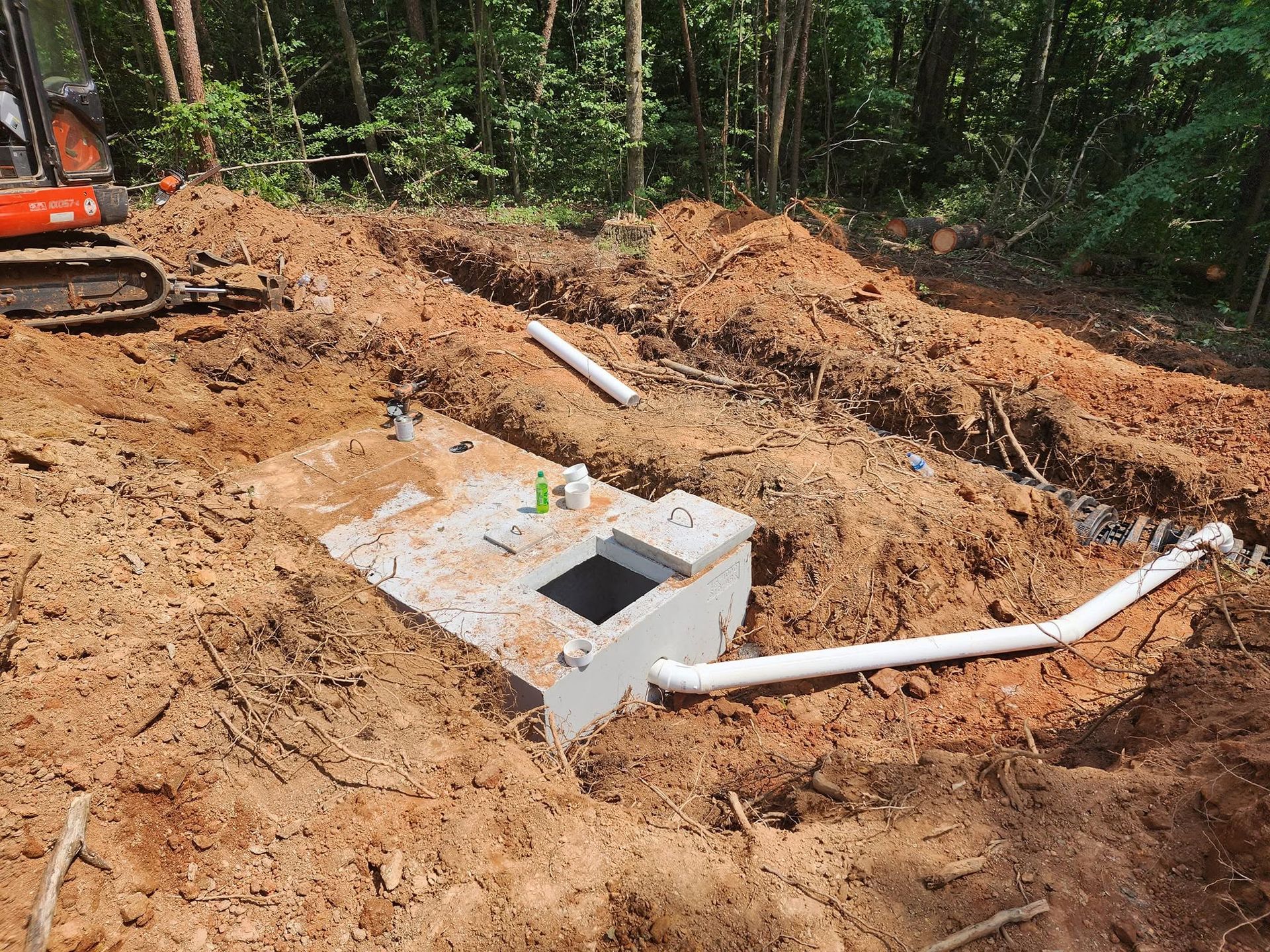
Installation involves excavating to specified depths for tanks and drain fields, placing components according to engineered plans, and backfilling with material that supports proper settling and drainage. The process requires precise depth control, level tank placement, and correct pipe slopes to ensure wastewater flows through the system as designed and effluent disperses evenly in the drain field.
Schedule a septic installation consultation to review your property's soil conditions, site layout, and system requirements.
Why Installation Standards Matter for Performance
Careful planning during installation supports reliable long-term performance. Excavation for septic tanks must reach stable subsoil to prevent settling, and drain field trenches must maintain consistent depth and spacing to distribute effluent evenly. Teague Outdoor Contracting follows project specifications that dictate tank size, drain field layout, and component placement based on soil tests, household size, and site topography.
After installation, your system will handle daily wastewater flow without backups or surface pooling. You'll notice that drains function normally, the yard above the drain field remains dry, and the system operates without odors or overflow. These outcomes confirm that tanks are level, pipes slope correctly, and the drain field has adequate absorption capacity for the property's wastewater volume.
Installation includes placing all tanks, distribution boxes, and drain field lines according to the engineered design. It does not include ongoing maintenance like pumping or inspections, which property owners must schedule separately to keep the system functioning properly. Correct installation from the start reduces the likelihood of costly repairs and ensures the system meets its expected lifespan.
Answers to Frequent Septic Installation Questions
Property owners installing septic systems in Ellijay often have questions about site suitability, installation steps, and what affects system design.
What determines where a septic system can be installed on a property?
Septic systems must be placed where soil percolation rates allow adequate drainage, slopes are gentle enough for stable tank placement, and setback distances from wells, property lines, and structures meet local regulations. Soil tests and site evaluations identify suitable locations before excavation begins.
How does sloped terrain in Ellijay affect septic installation?
Slopes require drain fields to be positioned on contours or terraced into the hillside to prevent effluent from flowing too quickly through the absorption area. Tanks may need additional anchoring or deeper burial to remain level, and pipes must maintain correct slopes despite elevation changes across the site.
What happens during the installation process?
Excavation creates openings for the septic tank and trenches for the drain field. The tank is placed on a stable base, pipes are connected and sloped correctly, and the drain field is backfilled with gravel and soil in layers that support drainage and prevent compaction. Final grading restores the surface above the system.
How long does septic system installation typically take?
Installation duration depends on system size, site access, soil conditions, and weather. Simple residential systems may be completed in a few days, while larger commercial systems or sites with challenging terrain require more time for excavation and component placement.
What maintenance does a septic system require after installation?
Systems need regular pumping to remove solids from the tank, typically every few years depending on household size and usage. Inspections check for leaks, pipe damage, and drain field saturation, helping identify issues before they cause backups or system failure.
Teague Outdoor Contracting installs septic systems across residential and commercial properties in Ellijay, coordinating excavation, placement, and site preparation with engineered plans. Arrange a consultation to assess your property's suitability and discuss system options for your needs.